What I Wish My Mum Had Known About Weight Gain in Perimenopause
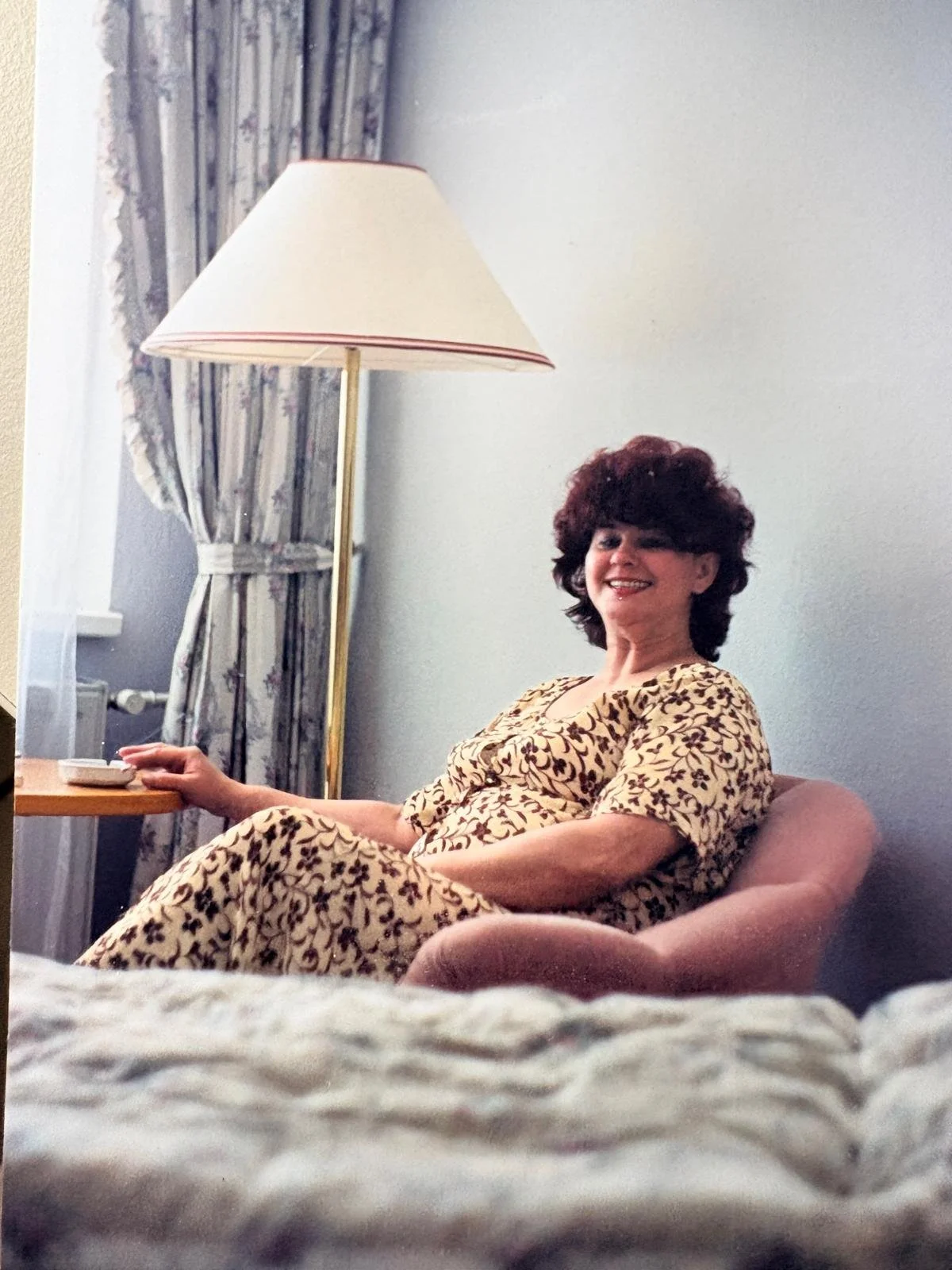
The personal story behind my workshop, Don’t Lose Yourself on the Way to Weight Loss.
Today (3rd of August) would have been my mum’s 77th birthday.
She passed away ten years ago, but her life continues to shape my work in ways I have not always spoken about publicly.
My mum dedicated much of her life to helping other people.
Not occasionally.
Not when it was convenient.
Every day.
She worked within healthcare, raised two children, cared for her family and gave her time generously to people who needed her.
She was deeply loved, respected and admired.
She even received an award from the Polish Ministry of Health for her contribution to the healthcare system.
Yet this remarkable woman struggled to see her own worth.
When her body changed, the way she saw herself changed
When my mum began gaining weight in perimenopause, she did not simply experience it as a physical change.
She experienced it as a personal failure.
After gaining her first ten kilograms, she began to feel as though she was no longer acceptable.
She started dieting.
Then stopping.
Then beginning again.
For at least a decade, she moved through cycles of restriction, hope, disappointment and shame.
As a teenager, I watched her stand in front of the mirror in the evenings and speak to herself with a level of cruelty she would never have directed towards another person.
This intelligent, generous and accomplished woman could look at her reflection and feel as though she was worth nothing.
Because her weight had changed.
A woman can give everything and still feel she is not enough
My mum was not weak.
She did not lack intelligence, discipline or achievement.
She had built a meaningful life.
She had helped many people.
She was valued by her family, colleagues and community.
Yet none of that protected her from the belief that her changing body made her less worthy.
This is one of the most painful things about body shame.
It does not only affect women who lack confidence in other areas of life.
It can live quietly inside highly capable women.
Women who lead companies.
Women who raise families.
Women who hold communities together.
Women who care for ageing parents, support partners, organise households and show up for everyone around them.
A woman can be a pillar of her family and society, while privately believing she is not attractive enough, slim enough or good enough.
I meet women like my mum in my work all the time.
They are not failing.
They are exhausted from trying to meet an impossible standard while navigating a body and a life that are changing.
Perimenopause is not the time to begin another war
Perimenopause can affect appetite, sleep, mood, stress resilience, muscle health, insulin sensitivity and the way the body uses and stores energy.
These changes are real.
They deserve attention.
They may mean that a woman needs to eat differently, move differently, protect her sleep, support her metabolic health and reconsider the strategies she used in the past.
But understanding that your body needs different support is not the same as deciding that your body is a problem.
This is where many women become trapped.
They notice weight gain and immediately respond with panic.
They eat less.
They remove more foods.
They become stricter.
They promise themselves they will be “good” from Monday.
They start weighing, measuring and monitoring every decision.
The body changes, and instead of becoming more curious, they become more controlling.
But lasting change rarely begins with punishment.
It begins with understanding.
Your body is not working against you.
It is communicating with you.
Instead of asking:
“What is wrong with me?”
We can begin asking:
“What does my body need now?”
What might have been different for my mum?
I often wonder what might have happened if my mum had received different support.
What if someone had properly explained perimenopause to her?
What if she had understood that changes in weight, appetite, sleep and body composition were not evidence that she had become lazy or undisciplined?
What if someone had helped her support her metabolic health without asking her to reject herself first?
What if she had been given structure without shame?
What if someone had reminded her that gaining weight did not erase the woman she was?
I cannot change what happened for my mum.
But I can allow her story to influence the way I support women now.
Her life is one of the reasons I will never use shame as a tool for change.
It is one of the reasons I look beyond food alone.
It is why my work brings together nutrition, metabolism, psychology, behaviour and compassion.
Women deserve science.
But they also deserve humanity.
Knowledge without compassion can easily become another weapon a woman uses against herself.
Compassion without practical support may leave her feeling understood but still unsure what to do.
She needs both.
Growing older is not a personal failure
I am now a woman in late perimenopause myself.
I understand how surprising this stage can be.
I notice changes in my body.
I observe them sometimes with curiosity, and sometimes with frustration.
But I will never again believe that I have failed at life because I have grown older or because my appearance has changed.
Our bodies are not static objects.
They adapt through puberty, pregnancy, stress, illness, joy, grief, ageing and menopause.
The female body is one of the most extraordinary biological systems on this planet.
It carries us through every season of life.
It protects.
It repairs.
It responds.
It changes.
It makes life possible.
Our bodies deserve our curiosity, respect and care.
Not another war.
For women like my mum, I created the workshop
Today, on my mum’s birthday, I am announcing the workshop I wish she could have attended.
Don’t Lose Yourself on the Way to Weight Loss is for women who feel frightened, frustrated or shocked by the changes happening in midlife.
It is for women who want to support their health and may want to lose weight, but do not want to spend another decade dieting, blaming themselves and beginning again.
It is for the woman who wants structure, but does not want punishment.
The woman who wants practical solutions, but also needs to understand why this has become so difficult.
The woman who is ready to stop treating her body like another problem to fix.
During the workshop, we will explore:
why weight regulation can change in perimenopause
why shame is the wrong starting point for change
how dieting can weaken trust in your body and around food
what your changing body may need now
how to create supportive structure without returning to rigid control
how to care for your health without losing yourself in the process
This is not a workshop about pretending weight does not matter to you.
I understand that it may matter deeply.
It is about making sure that your desire to change your body does not require you to abandon, punish or hate yourself first.
You are more than the body you are trying to change
If you are the person everyone relies on, this is for you.
If you care for everyone else but struggle to extend the same care towards yourself, this is for you.
If you have supported many people around you, yet still feel ashamed because your body has changed, this is for you.
You are not less valuable because you have entered a new stage of life.
You have not failed because your old strategies no longer work.
And you do not need to become a smaller woman before you are allowed to respect the woman you already are.
This workshop is in honour of my mum.
And for every woman who has ever looked in the mirror and forgotten who she is.
Don’t Lose Yourself on the Way to Weight Loss
If you feel trapped and need a fresh perspective, practical guidance and compassionate structure, I would love you to join me.
Reserve your place
Where: St John’s Church, West Byfleet
When: 15th September, 7 PM